

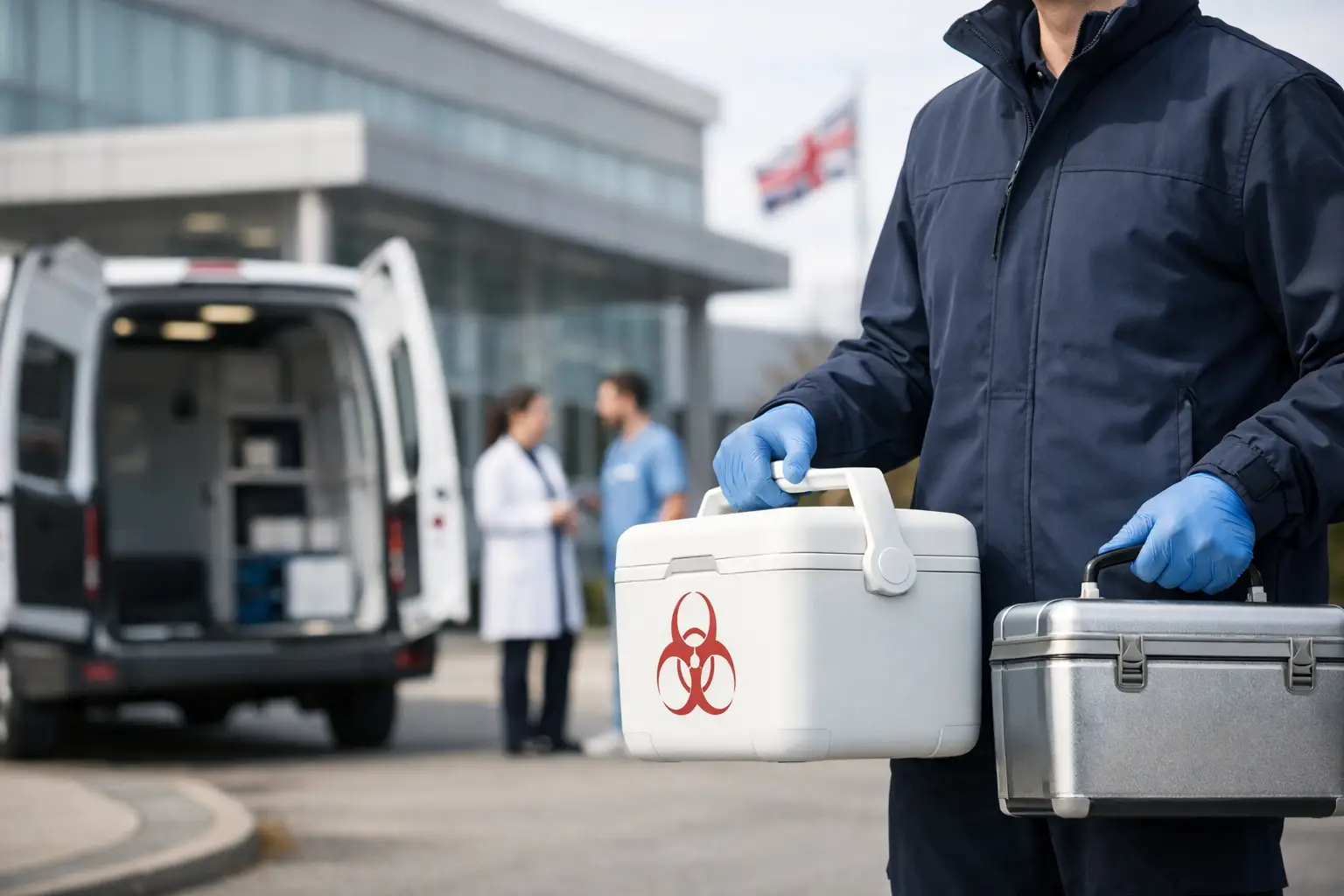
A missed collection window in healthcare does not just delay a parcel. It can interrupt testing, affect patient pathways, hold up theatre schedules, or create compliance issues that someone then has to explain. That is why choosing the right medical courier service UK businesses rely on is not a routine buying decision. It is an operational risk decision.
For hospitals, laboratories, pharmacies, clinics, and medical suppliers, the courier is part of the service chain. If the transport stage fails, the wider process fails with it. Speed matters, but on its own it is not enough. Sensitive medical consignments need controlled handling, clear accountability, accurate tracking, and a provider that understands what is actually at stake.
What a medical courier service UK businesses should expect
A specialist medical courier is not simply a fast van with a booking line. The service should be built around time-critical collection, direct delivery where required, secure handling, and procedures that support regulated or sensitive consignments.
In practice, that can include pathology samples moving from clinic to laboratory, pharmaceuticals being transferred between sites, urgent medical devices needed for a procedure, or temperature-sensitive items that cannot sit in a depot while a network sorts itself out. In some cases, the shipment is clinically urgent. In others, the item itself may not be fragile, but the deadline is fixed and missing it creates avoidable disruption.
That distinction matters. A reliable provider looks at the nature of the consignment, the urgency, the chain of custody, and the delivery environment. A routine scheduled movement between established sites will need a different operating model from an emergency same-day collection to support an unexpected shortage.
Why general parcel networks are often the wrong fit
There is a place for standard parcel distribution, especially for non-urgent and low-risk goods. But medical logistics often requires tighter control than a hub-based network can realistically provide.
When items pass through multiple handling points, the risk profile changes. Delays become harder to predict, accountability becomes less direct, and the shipment may spend longer in uncontrolled conditions than the sender expected. For general merchandise, that may be acceptable. For medical consignments, it often is not.
A dedicated medical courier service UK organisations can depend on should be able to offer direct-drive transport for urgent jobs, rapid response outside standard office hours, and a clear record of who handled the consignment and when. That is especially relevant for diagnostic materials, high-value equipment, controlled pharmaceuticals, and documents tied to patient care or regulatory review.
The operational factors that matter most
Procurement teams and operations managers usually start with delivery speed, and rightly so. But the better question is whether the service can maintain control under pressure.
Availability is one of the first tests. Medical logistics does not keep convenient hours. A courier that only functions well from nine to five may work for planned collections, but it is less useful when a laboratory needs an urgent transfer late in the evening or a hospital requires an immediate parts movement overnight.
Vehicle allocation also matters. If a provider is heavily dependent on shared routes, subcontracted ad hoc capacity, or deferred collections, then response times can vary when demand spikes. A specialist operator should be able to explain how quickly they can mobilise, what service levels they can support, and whether the consignment will travel directly or via intermediate stops.
Communication is another practical differentiator. Business customers do not need vague reassurances. They need live updates, named points of contact, and a straightforward escalation path when timings change or site access becomes difficult. In medical transport, silence is rarely neutral. It usually means someone else is carrying the operational risk.
Compliance and chain of custody are not optional extras
Not every medical movement carries the same regulatory burden, but every shipment should be handled as if traceability matters – because it does.
Chain of custody is especially important where the contents are sensitive, valuable, or subject to internal audit requirements. That can apply to samples, pharmaceuticals, devices, records, and investigational materials. The sender needs confidence that the consignment has been collected by the right driver, kept under the right controls, and handed over at the correct location with proper confirmation.
This is where specialist providers stand apart. The service should not rely on assumptions or improvised site procedures. Drivers need clear collection and delivery instructions, proof of handover, and an understanding of what to do if the consignee is unavailable, the site requires security clearance, or the goods cannot be left unattended.
For procurement and compliance teams, the detail matters. Ask how consignments are identified, how delivery events are recorded, and what evidence is available after completion. If the answer is unclear at the quoting stage, it will not become clearer when a critical shipment is in transit.
Temperature control and handling standards
Some medical deliveries need active temperature management. Others simply need to avoid exposure to unsuitable conditions or unnecessary dwell time. The right requirement depends on the goods.
A common mistake is treating all medical transport as if it requires the same specification. It does not. Blood products, pharmaceuticals, laboratory materials, and medical components can each demand different packaging, monitoring, and transit procedures. Over-specifying the service adds cost. Under-specifying it adds risk.
A capable courier should be able to discuss the practical handling requirements of the consignment, not just offer a generic medical label. That includes collection timing, packaging expectations, temperature considerations, delivery deadlines, and whether the job should move as a dedicated vehicle service.
The best providers are disciplined here. They do not promise a one-size-fits-all solution because medical logistics is not one-size-fits-all.
Same-day and urgent medical logistics
Urgency changes the transport plan. A same-day job is not only about sending the nearest driver. It requires fast decision-making, realistic route planning, and the ability to maintain service quality even when the instruction arrives at short notice.
For a medical courier service UK coverage is often part of the challenge. A provider may respond quickly in one region but struggle to support collections across multiple sites, rural locations, or late-night hospital deliveries. National reach means little if the operating response is inconsistent.
This is why direct transport is so valuable for urgent medical work. It reduces handling, shortens transit time, and gives the sender better visibility from collection to delivery. For critical consignments, that level of control can be more important than headline pricing.
There is, of course, a trade-off. Dedicated urgent transport costs more than economy distribution. But when delay carries clinical, commercial, or compliance consequences, the cheaper option can become the expensive one very quickly.
How to assess a provider before you commit
A serious medical courier partner should be able to answer operational questions without hesitation. Can they support timed collections and out-of-hours work? Do they offer dedicated vehicles? How do they handle chain-of-custody requirements? What is their escalation process if a site is inaccessible or a receiver is delayed?
It is also worth looking beyond the sales conversation. Ask how exceptions are managed, not only how standard jobs are booked. Most providers sound effective when everything goes to plan. The better test is how they respond when theatres overrun, laboratory cut-off times change, customs paperwork needs amendment, or a delivery has to be rerouted at short notice.
Consistency matters as much as capability. One successful urgent run is useful. A repeatable service model is what procurement teams actually buy.
For organisations with regular movement patterns, a contractual arrangement often makes more sense than repeated spot bookings. It allows collection windows, reporting expectations, handling standards, and communication protocols to be defined in advance. That reduces ambiguity and gives both sides a more reliable operating structure.
Choosing for resilience, not just price
The right provider is the one that reduces risk across the full movement, from collection to confirmed handover. That includes speed, but it also includes judgement, process control, and the ability to act decisively when circumstances change.
Medical logistics is unforgiving of weak execution. If a courier misses a slot, loses visibility, or mishandles a sensitive consignment, the consequences often spread far beyond transport. Clinics, labs, pharmacies, and healthcare suppliers need more than a delivery company. They need an accountable logistics partner with the operational discipline to protect time-critical shipments properly.
That is the standard a medical courier should be held to. If your organisation depends on urgent, secure and controlled transport, choosing carefully at the outset will save far more than time later on.


