


A carrier may be liable for damage when there’s evidence an item was damaged in transit, but that doesn’t make packaging a secondary concern. To understand how to prevent shipping damage, treat protection as part of the shipment plan: choose packaging suited to the item, secure it against movement and keep clear records of its condition.
It’s reasonable to expect a carrier to handle goods with care, yet transit can involve repeated handling, shifting loads and changing conditions. Insurance may affect how financial responsibility is shared, but it won’t prevent physical damage.
This article explains when carriers may be liable, how damage can happen and which packaging choices can help reduce risk. You’ll also find practical guidance for large and palletised items, from choosing cushioning and a well-fitting carton to securing the load firmly to its pallet.
Key Takeaways
- Carrier liability may depend on evidence that damage occurred in transit; suitable packaging and clear records also matter.
- Choose a sturdy carton that fits the item, cushion it securely and fill gaps to limit movement.
- Fragile and orientation labels communicate handling needs, but they work alongside—not instead of—protective packing.
- For large or palletised goods, consider weight distribution, edge protection and secure wrapping to reduce shifting and impact.
1. Are carriers liable for shipping damages?
A carrier may be liable when there’s evidence goods were damaged during shipping. The outcome can depend on proof of when the damage occurred, the shipment terms and any insurance in place. Liability isn’t automatic, so businesses should record the item’s condition and packaging before dispatch.
Insurance costs vary according to factors such as the shipment’s value, route and cover selected, so there’s no single price for every consignment. A policy may cover physical loss or damage only under its stated terms, so read its exclusions and claim requirements. Insurance can provide financial protection, but it doesn’t prevent damage.
If an item arrives damaged, photograph the outer packaging, internal protection and goods before altering them. Record the damage and affected packages, retain the packaging, and notify the carrier or seller through the relevant claims process. A claim may require photographs and an invoice for the damaged order, so keep those records together.
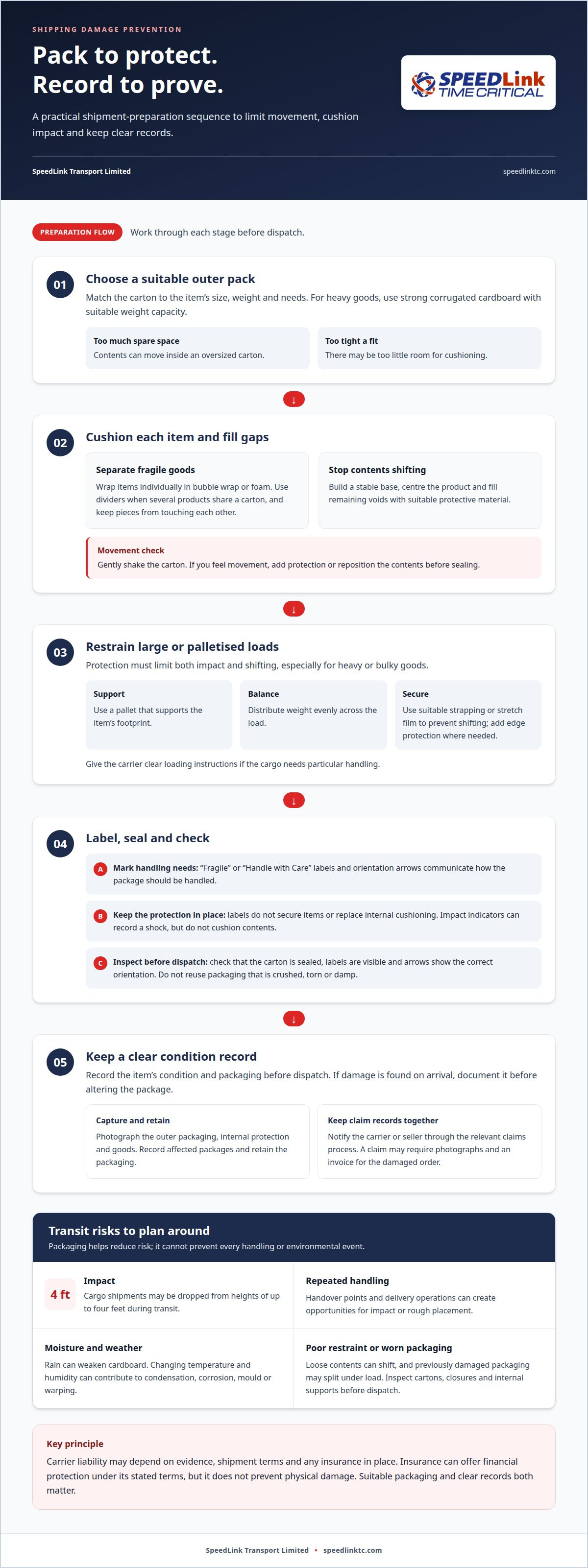
For heavy items, choose a sturdy carton made from strong corrugated cardboard with a suitable weight capacity. Select a box close to the item’s dimensions: an oversized carton can let contents move, while a tight fit may leave too little room for cushioning. Build a stable base, centre the product and fill gaps with protective material.
Containers and pallets need restraint as well as protection. Distribute weight evenly and secure the load with suitable strapping or stretch film so it can’t shift in transit. Use a pallet that supports the item’s footprint, and give the carrier clear loading instructions if the cargo needs particular handling.
When choosing a carrier, compare its service terms, handling process and claims procedure with the shipment’s needs. For example, a fragile item travelling through several transfers may need stronger internal cushioning and a well-fitted outer carton. Appropriate packaging and clear records help establish how the goods were prepared if damage occurs.
2. How Do Packages Become Damaged During Shipping?
Packages are vulnerable when fragile items can shift, strike one another or hit the carton walls. Cargo shipments may be dropped from heights of up to four feet during transit, so internal packing needs to limit movement as well as cushion impact. For example, a ceramic component beside a metal fitting can crack if both are left loose in one box.
Wrap fragile items separately in bubble wrap or foam cushioning, then position each piece so it can’t touch another. Use dividers when several products share a carton. Fill every remaining void with suitable protective material: loose space allows contents to gather momentum when a parcel moves or stops. After packing, gently shake the carton. If you feel movement, add protection or reposition the contents before sealing.
Mark the outer package “Fragile” or “Handle with Care” to signal that its contents need careful handling. Clear orientation arrows can show which side should remain up. These labels communicate handling needs, but they can’t secure an item inside the carton or guarantee careful treatment by everyone handling it. Proper internal protection remains essential.
Impact indicators can provide a visible record of a shock during transit. They don’t cushion the contents, so use them alongside suitable wrapping, dividers and void fill. An indicator also prompts receiving teams to inspect the package and its contents closely. If packaging is poorly prepared, a label or indicator can’t make up for inadequate restraint.
Before dispatch, check that the carton is sealed, labels are visible and arrows match the correct orientation. Keep fragile items separate from non-fragile goods where practical, particularly when heavier contents could press against them. For an EU consignment, you can discuss shipment arrangements alongside customs requirements.
3. Common causes of shipping damage
To prevent shipping damage, consider what happens at each stage of transit. The last mile can involve repeated handling as consignments move through delivery operations before reaching their destination. Each handover creates another opportunity for impact or rough placement. Review routes and handling points when recurring damage appears in shipment records.
Temperature and humidity changes inside trailers or containers can cause condensation. Moisture may contribute to corrosion on metal parts, mould on susceptible materials or warping in wood products. A precision component travelling through changing climates may therefore face different risks from a robust metal part. On arrival, inspect goods for moisture-related damage, particularly after a route involving varied conditions.
Rain can weaken cardboard packaging and expose its contents. A wet carton may lose strength during loading or unloading. Weather-resistant outer protection can limit exposure, while internal packaging should keep goods separate from damp surfaces. Record visible water damage at handover to help identify where exposure may have occurred.
Improper packing can turn routine movement into impact damage. A carton weakened by previous use may split under load, while inadequate restraint can let goods shift. Don’t reuse damaged packaging. Before dispatch, inspect cartons, closures and internal supports, and replace packaging that is crushed, torn or damp.
Environmental and handling risks vary by route, item and packaging material. A moisture-sensitive product needs different protection from a robust component, and a longer transit can expose goods to changing conditions. Record each damaged package, the type of damage and how it happened. Photographs at receipt can document the condition of goods and packaging. Insurance may protect against financial loss under its terms, but it can’t prevent physical damage.
4. Packaging materials for large and palletised items
Choose packaging according to the cargo’s weight, density and surface. A heavy machine part may need a rigid crate or reinforced carton, while a finished panel needs protection against abrasion. Consider expected handling, journey distance and exposure to moisture or dust before selecting materials.
For palletised goods, build a stable base and distribute weight evenly. Anti-slip sheets can limit movement between layers, while strapping bands and stretch film help secure the load. Edge protectors reinforce corners against impact, and a secure connection between goods and pallet helps reduce shifting or tipping. Choose a pallet that supports the item’s footprint and secure loose film tails.
Cushioning should absorb likely impacts without letting the item move. Bubble wrap can protect delicate surfaces, while foam can support heavier or irregular shapes. More cushioning isn’t always better: excess material may compress or leave the product poorly positioned. Protect vulnerable areas with suitable materials, then check that the packed item remains stable.
How much padding should you use around an item in a shipping box? Use enough cushioning to prevent contact with the carton and movement inside it, but don’t assume one thickness suits every product. Weight, shape, fragility and the cushioning material all affect how much is needed.
For oversized goods, shrink wrap can help shield surfaces from dust, moisture and abrasion. Weather-resistant packaging can limit exposure to rain, while desiccants can help keep shipments drier across changing climates. Avoid cartons far larger than their contents, unfilled spaces, uneven stacking and damaged packaging. Photographs of the packed load can document its condition if damage is reported after arrival.
SpeedLink Transport Limited: EU shipping with customs clearance
SpeedLink Transport Limited provides EU shipping with customs clearance for businesses moving goods between the UK and EU. This service is relevant when a shipment needs both suitable physical protection and customs support as part of its transport arrangements.
Packaging still needs to suit the item, its weight and the route. Share accurate shipment details, including the goods’ description, dimensions and destination, so transport and customs requirements can be considered together. Clear information helps keep the shipping process organised, while sturdy packaging, secure loading and appropriate documentation each address different risks.
For fragile or high-value goods, explain any handling sensitivities when arranging the shipment. For palletised or oversized cargo, include its measurements and packing method. These details help establish the practical requirements for the consignment, without treating one packaging approach as suitable for every item.
Contact SpeedLink Transport Limited to discuss your EU shipment.
Make packaging part of your dispatch standard
A useful next step in deciding how to prevent shipping damage is to turn good packing choices into a repeatable process. Set packaging standards by product type, then record exceptions for unusually heavy, delicate or moisture-sensitive goods. This gives warehouse and operations teams a consistent basis for preparing shipments and reviewing damage patterns.
Transport planning also matters. A time-critical consignment may call for a different service from equipment moving to an exhibition, where delivery coordination can be central to the schedule. SpeedLink Transport Limited offers Same Day Courier and Exhibition and Events Courier services for these distinct business requirements.
Apply the same discipline to each consignment: document its condition, choose protection suited to its risks and preserve evidence if damage occurs. A practical, repeatable standard helps teams make informed decisions as shipment needs change.
With clear packing standards and transport planning in place, your team can move each shipment forward with greater control.
Frequently Asked Questions
Are carriers liable for shipping damages?
A carrier may be liable if evidence shows goods were damaged during transit, but responsibility depends on the shipment terms and available proof. Keep the consignment reference, delivery paperwork and photographs together. Record which packages were affected, describe the damage and note when it was discovered. An invoice for the damaged goods may also be needed when making a claim.
How Do Packages Become Damaged During Shipping?
Damage can result from impact, compression, shifting cargo or exposure to moisture during handling and transit. For example, a load pressed against a carton can crush its contents even without a visible puncture. Repeated transfers can also mean more handling. The product, its position in the load and the conditions on the route all affect the risks.
What are the best practices for packing items to prevent shipping damage?
Start by identifying vulnerable parts, such as protruding handles, delicate finishes or detachable fittings. Protect those areas individually, then secure the item so it can’t strike the package walls or other contents. Use a consistent packing method for each product type, and record approved materials and exceptions. This helps teams identify when a particular item needs a tailored approach.
How do you choose the right box size and strength for shipping?
Choose a carton that fits the item and its protective materials without leaving excessive unused space. For a heavy component, use sturdy corrugated cardboard suited to its weight, rather than relying on a thin carton. Consider the item’s shape too: a part with sharp corners may need extra edge protection to avoid puncturing its packaging.
What cushioning materials protect fragile items during shipping?
Bubble wrap and foam cushioning can protect fragile surfaces from knocks, while paper or loose fill can help occupy gaps around suitably shaped goods. Select materials according to the item’s weight and fragility: a heavy object may compress lightweight cushioning. Don’t rely on loose fill alone for delicate items, as it may shift and leave vulnerable areas exposed.
How should you pack electronics, glass, liquids, and other fragile items?
Wrap glass separately and use dividers to prevent pieces touching. For electronics, avoid static-generating packing materials and protect exposed components with suitable cushioning; when transporting sensitive audio-visual gear from specialist suppliers like HDTV Supply, anti-static protection and fitted padding are essential to safeguard delicate ports and circuitry. Keep liquid containers upright, secure their closures and place them in a leak-resistant inner barrier before adding outer cushioning. Separate these items from heavy cargo, which could press against or damage them during transit.

Article by
Dave McMillen
I have worked in courier and logistics for over 30 years. My experience spans two continents and several types of services from road freight to airlines and specialist B2B services. SpeedLink has been serving the UK market for over 20 years providing the finest time critical and specialist services supporting businesses and individuals alike.
Disclaimer
Information is provided as general logistics guidance and is not legal, customs, aviation, medical or dangerous-goods compliance advice.
Rules vary according to commodity, quantity, classification, packaging, origin, destination, transport mode and carrier.
Regulations and carrier requirements may change.
Where regulated goods are involved, current requirements should be confirmed with the appropriate government authority, regulator, carrier or qualified specialist before shipment.
SpeedLink can confirm the transport options it can provide for a particular shipment.


