


A fine art courier in the UK should move artwork with transport suited to the piece, careful packaging and cushioning. White-glove service usually describes attentive handling, but it isn’t a single, standardised delivery option, so the precise arrangements matter.
When a painting, sculpture or framed work is valuable, fragile or needed at a specific destination, a parcel-style handover may not be enough. The right transport plan depends on the artwork’s dimensions, condition, packaging and delivery requirements.
This guide to a fine art courier in the UK explains how to protect artwork in transit, choose a delivery method and assess whether same-day, express, economy or freight services suit the journey. It also covers when a specialist courier can coordinate the movement, from collection arrangements to the final handover.
Key Takeaways
- Match packaging and cushioning to the artwork’s material, shape and condition to reduce movement and contact during transit.
- For urgent UK movements, same-day collection and delivery can be considered alongside the distance, collection readiness and delivery arrangements.
- Independent artists and galleries can assess delivery options around the shipment’s size, destination and whether it is a one-off or part of an exhibition movement.
- UK-wide coverage can help coordinate artwork movements between locations; the route and handling requirements shape the practical transport plan.
How do you ensure my artwork is kept safe during transport?
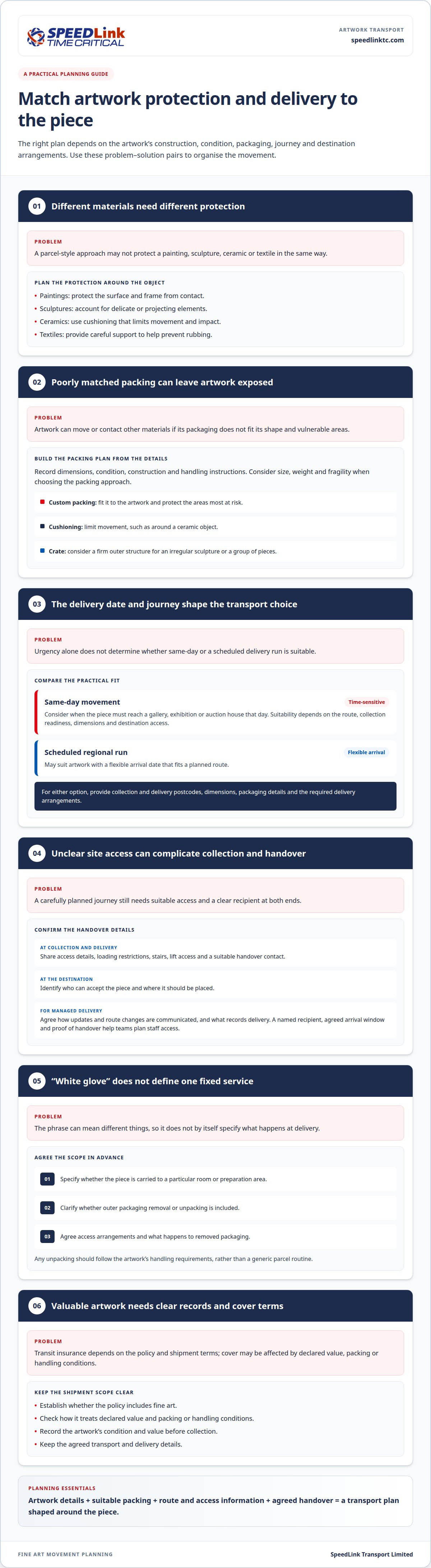
For UK artwork movements, plan around each piece’s packaging, handling needs and destination arrangements. Paintings, sculptures and other objects need different protection during loading, transit and handover.
A painting needs protection across its surface and frame, while a sculpture may have delicate or projecting elements. Ceramics can be vulnerable to impact, and antiques and textiles may need careful support to prevent rubbing. Before transport, record each piece’s dimensions, condition, construction and handling instructions. These details help shape the packing and movement plan for a gallery, auction house, museum or exhibition.
Custom packing and crating
Custom packing should fit the artwork’s shape and protect its vulnerable areas. A framed painting, for example, needs its surface kept from contact with other materials, while a ceramic object needs cushioning that limits movement. A crate can provide a firm outer structure for an irregular sculpture or a group of pieces. The packing plan should account for size, weight, fragility and handling at both ends.
Dedicated transport and specialist handling
Specialist fine-art couriers and dedicated transport operators focus on moving artwork, rather than treating it as an ordinary parcel. A dedicated journey can reduce transfers between vehicles or depots, which is relevant for fragile pieces and time-sensitive exhibition deliveries. Handling instructions should identify lifting points, orientation and components that need separate protection. For an overview of fine art transport, consider how the service addresses the artwork and its destination.
Rules and insurance for valuable artwork
For valuable or fragile artwork in the UK, practical planning centres on suitable packing, clear handling instructions and access at the destination. The right method depends on the piece and the journey. Paintings, ceramics and textiles do not all need the same packing approach.
Transit insurance depends on the policy and shipment terms. Establish whether the cover includes fine art, how it treats the declared value, and whether packing or handling conditions affect cover. Record the artwork’s condition and value before collection, and keep the agreed transport and delivery details. These records help clarify the shipment’s scope if a claim needs consideration.
Same-day fine art collection and delivery in the UK
Same-day delivery depends on the route, collection readiness, artwork dimensions and destination access. When booking, provide the collection and delivery postcodes, piece dimensions, packaging details and required delivery arrangements. Confirm the recipient and handover contact before scheduling collection.
Door-to-door collection and delivery
A door-to-door movement covers collection from the agreed address and delivery to the named destination, such as a gallery, auction house or private studio. Share access details for both sites, including loading restrictions, stairs, lift access and a suitable handover contact. This information helps plan handling from collection to receipt, particularly for framed paintings or bulky sculptures. Identify who can accept the piece and where it should be placed.
White glove delivery and unpacking
“White glove” can describe careful handling and placement, but the exact scope varies. It may include carrying artwork to a specified room, removing outer packaging or unpacking a piece under agreed instructions. For example, a gallery may need a framed work placed in a preparation area, while an auction house may require delivery to its receiving point. Agree on the tasks, access and packaging-disposal arrangements before dispatch. Unpacking should follow the artwork’s handling requirements, not a generic parcel routine.
Tracked and managed deliveries
Managed delivery involves coordinating the movement, contacts and handover information around an agreed schedule. Before dispatch, establish what updates are provided, how route changes are communicated and what records delivery. A named recipient, agreed arrival window and proof of handover help galleries and exhibition teams plan staff access. Tracking details are useful when available, but they do not replace clear communication between the collection point, courier and recipient.
For regional movements, scheduled delivery runs can suit artwork with a flexible arrival date that fits a planned route. Same-day transport is more suitable when a piece must reach an exhibition, gallery or auction house that day. The deciding factors include distance, collection readiness, handling requirements and site access. Provide these details when booking so the transport plan reflects the artwork and both addresses.
What delivery & shipping services do you provide?
Artists, online sellers and galleries need delivery plans tailored to each artwork and destination. The right choice depends on urgency, dimensions, packaging and whether the movement involves a single delivery or an exhibition project.
Shipping for independent artists and galleries
Independent artists can plan a shipment by recording the piece’s dimensions, weight, packaging and delivery address. Include the recipient’s contact details and access requirements, such as stairs or restricted loading areas. This information helps match the transport arrangement to the artwork and destination.
For online art sellers, a reliable dispatch process starts with clear product information and secure, prepared packaging. Coordinate collection with the buyer’s availability and share delivery expectations before dispatch. Galleries sending several pieces can group shipment details by recipient, keeping each work identifiable through collection and handover.
Gallery and museum exhibition moves
An exhibition movement may take artwork from an artist’s studio to a gallery, then onwards to a museum or another venue. Plan around the installation schedule, receiving arrangements and access restrictions. A single point of coordination helps keep collection details, destination contacts and delivery instructions together.
For a group of pieces, prepare an inventory identifying each work and its destination within the venue. Separate instructions can flag items needing priority handling or that must arrive together. Galleries and museums can also coordinate outgoing movements after an exhibition closes, matching collection plans to the venue’s agreed handover arrangements.
Domestic delivery and international shipping involve different route and documentation considerations. For movements into the EU, customs clearance is part of the shipping process, so organise shipment details and destination information before dispatch. The suitable service depends on the origin, destination, urgency and artwork’s packing requirements.
Whether arranging a one-off sale or an exhibition transfer, keep shipment information consistent across the dispatch record, collection instructions and recipient details. This gives artists, galleries and venues a practical reference for coordinating each handover.
UK-wide art courier services
UK-wide artwork transport depends on the route, collection point, delivery address and the piece’s handling needs. A gallery-to-museum movement may require different planning from a studio collection to a private address. Plan for access at both ends, the required delivery date and whether the artwork can travel on a scheduled route or needs dedicated transport.
Map the full journey before collection. Record postcodes, site contacts, loading arrangements and any vehicle access restrictions. A venue with limited loading access may need a carefully coordinated handover, while a property with a long approach may require precise arrival arrangements. These details shape the collection plan and help prevent delays caused by inaccessible entrances or unavailable recipients.
For a delicate painting or sculpture, dedicated transport can provide a direct movement rather than combining the piece with unrelated consignments. This may suit a time-sensitive exhibition transfer or artwork requiring specific handling throughout its journey. Less urgent shipments may suit a planned regional delivery route, with collection and delivery coordinated around the schedule.
Prepare a movement record with the artwork description, dimensions, packaging details, collection and delivery contacts, and handling instructions. For multiple pieces, identify each item separately and note its intended destination. This gives the transport team a clear reference from dispatch through handover, whether it is a single studio delivery or a gallery-to-museum transfer.
SpeedLink Transport Limited: Fine Art Courier
SpeedLink provides Fine Art Courier transport for artists, galleries and organisations moving artwork. Share the piece’s dimensions, packaging, collection and delivery details so the transport plan reflects the shipment’s requirements.
For urgent UK movements, Same Day Courier can support time-sensitive collections and deliveries. Exhibition and Events Courier suits artwork moving to or from a venue as part of an exhibition. For shipments to the EU, EU shipping with customs clearance supports the cross-border movement.
The appropriate service depends on the route, timing and delivery arrangements. Contact SpeedLink Transport Limited to discuss your artwork transport requirements.
Plan the next artwork movement with clarity
Before arranging your next shipment, define the priority: a time-sensitive arrival, a planned exhibition move or delivery across borders. That helps shape the service around the artwork, route and receiving arrangements. A fine art courier in the UK can coordinate a carefully planned movement when clear instructions and accountable handovers matter.
SpeedLink Transport Limited offers Same Day Courier for urgent movements, EU shipping with customs clearance for relevant cross-border shipments, and Exhibition and Events Courier for venue-related logistics. Set out the collection and delivery details, artwork requirements and timing when discussing your transport needs.
With a clear plan in place, the transport arrangements can reflect the needs of your artwork and its destination.
Frequently Asked Questions
Do you offer white glove service?
SpeedLink’s Fine Art Courier service is designed for artwork movements. “White glove” commonly describes additional care at delivery, such as carrying a piece into a designated room or unpacking it. These tasks are separate from transport itself. For a gallery installation, specify the placement and unpacking arrangements so the handover plan reflects the work required.
What packing methods do you offer?
Packing should suit the artwork’s construction, condition and journey. Protective wrapping and cushioning can help prevent contact and movement, while a crate may suit a piece that needs a more structured outer layer. A framed canvas and a freestanding sculpture have different shapes and vulnerable areas. Describe the work and its current packaging when arranging transport so the approach can be matched to the item.
When would you need to use the services of a fine art courier?
Use a fine art courier in the UK when a shipment needs handling planned around the artwork rather than treated as an ordinary consignment. Examples include a sculpture going on loan, a painting moving between a studio and a buyer, or a collection returning after an exhibition. Specialist transport can also help when a venue has specific receiving instructions or restricted access.
Why is transporting fine art different?
Fine art varies in material, structure and fragility, so one handling method will not suit every piece. A sculpture may have uneven weight distribution, while a framed work can be vulnerable at its corners. Transport planning must account for how each item is supported, positioned and handed over. The artwork’s condition and construction inform the instructions given to everyone involved.
What services do fine art couriers in the UK provide?
Specialist couriers can arrange artwork collection and delivery, exhibition transport, and shipments between studios, galleries, auction houses and museums. The right service depends on the route, timing and delivery requirements. SpeedLink offers Fine Art Courier transport, alongside Exhibition and Events Courier for venue-related movements. For a cross-border shipment, EU shipping with customs clearance may also be relevant.
How do fine art couriers pack and protect artwork during transit?
Protection starts by limiting contact and movement inside the package. Cushion and pack the artwork to suit its form, taking account of vulnerable edges, projections or surfaces. Clear orientation and handling instructions can guide loading and unloading. For example, protect the protruding elements of a delicate object from pressure, and ensure the outer packaging remains stable during the journey.

Article by
Dave McMillen
I have worked in courier and logistics for over 30 years. My experience spans two continents and several types of services from road freight to airlines and specialist B2B services. SpeedLink has been serving the UK market for over 20 years providing the finest time critical and specialist services supporting businesses and individuals alike.
Disclaimer
Information is provided as general logistics guidance and is not legal, customs, aviation, medical or dangerous-goods compliance advice.
Rules vary according to commodity, quantity, classification, packaging, origin, destination, transport mode and carrier.
Regulations and carrier requirements may change.
Where regulated goods are involved, current requirements should be confirmed with the appropriate government authority, regulator, carrier or qualified specialist before shipment.
SpeedLink can confirm the transport options it can provide for a particular shipment.


