


What does a tracking screen tell you about who actually had a business-critical shipment? Location visibility is useful, but it does not establish who handled an item or whether each transfer was recorded. A secure chain of custody courier service focuses on accountability as well as movement, helping businesses understand what happened to a shipment throughout transit.
If you are responsible for sensitive documents, equipment or other valuable goods, an unclear handover can complicate an internal review. This article explains what custody records can capture, where accountability can break down and what to agree before dispatch. It also shows how tracking can support visibility without replacing handover records, and how to match transport arrangements to the shipment’s risks. The aim is to help you set clear expectations and decide when secure, time-critical or specialist courier transport is appropriate, without assuming every sensitive shipment needs the same controls.
Key Takeaways
- A secure chain of custody courier service focuses on recording accountability as a shipment passes between responsible parties.
- Map each transport stage, from preparation to receipt, to clarify responsibility and what needs to be recorded.
- Before dispatch, identify the shipment, explain its sensitivity, and set out authorised recipients and communication expectations.
- Match security arrangements to the shipment’s needs, using GPS tracking for visibility alongside appropriate custody records.
What Does a Secure Chain of Custody Courier Actually Do?
A chain of custody records accountability for a shipment as it moves between responsible parties. A secure chain of custody courier service supports this by maintaining an account of who was responsible for the item at relevant points in its journey. The record and process should reflect the shipment and the arrangements agreed for its transport.
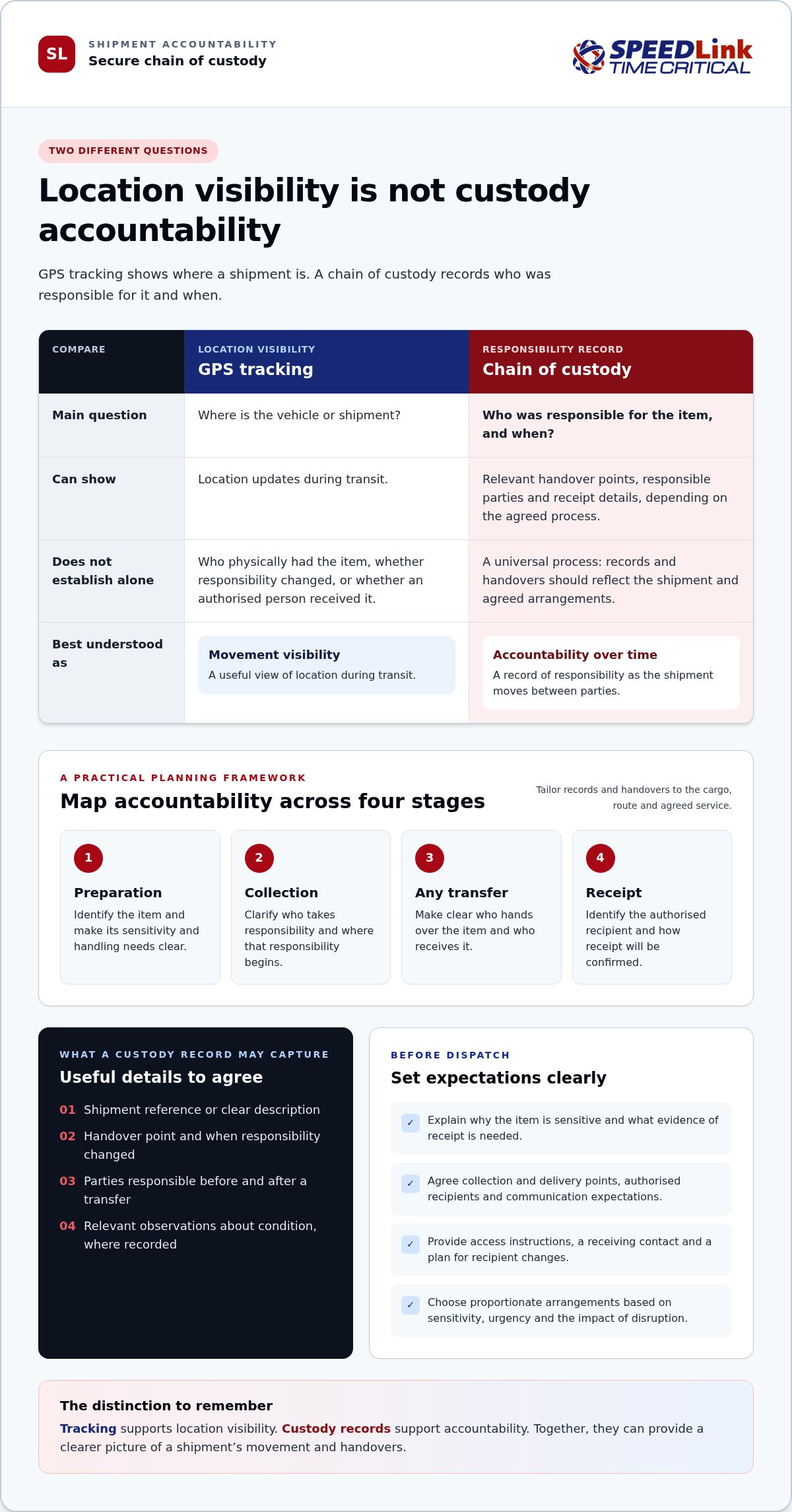
GPS tracking answers a different question: where is the vehicle or shipment? Location updates improve visibility, but they do not, by themselves, identify each person who took responsibility or document a transfer. Tracking shows where a shipment is; a chain of custody records who was responsible for it and when.
That distinction matters for sensitive documents, IT equipment and medical items, where an unexplained gap in responsibility can create uncertainty. The appropriate controls depend on the item’s sensitivity and the consequences of loss, delay or mishandling. Not every shipment needs the same arrangements.
What information can a custody record cover?
A custody record can link the shipment to the people and events involved in its movement. Depending on the agreed process, useful details may include:
- Shipment identity, such as a reference or clear description.
- The handover point and when responsibility changed.
- The parties responsible before and after a transfer.
- Relevant observations about the item’s condition, where recorded.
These are general examples, not a claim that every courier uses the same forms or procedures. The What is Chain of Custody? overview explains the wider concept and its applications.
Why is an unbroken custody history valuable?
A continuous record gives operations teams a clearer basis for checking whether the planned movement took place, investigating a reported issue and confirming responsibility at receipt. If a detail is missing, it may be harder to establish what happened and when. Clear expectations and suitable records can help, although they do not automatically determine the outcome of an investigation.
SpeedLink provides secure courier transport and tailored logistics planning for sensitive movements. Real-time GPS tracking can complement custody accountability by providing location visibility, but the two serve distinct purposes.
How Does Chain of Custody Work During Courier Transport?
A custody journey can be understood as a sequence of accountability checks. The exact records and handover process depend on the cargo, route and agreed service. Use the stages below as a planning framework, then decide what information each stage needs to capture.
- Shipment preparation: Is the item clearly identified, and do the people arranging transport understand its sensitivity and handling needs?
- Collection: Who takes responsibility for the shipment, and where does that responsibility begin?
- Any transfer: If responsibility changes during the journey, is it clear who hands over and who receives the item?
- Receipt: Who is authorised to receive the shipment, and how will your business confirm it reached the intended destination?
Preparation, collection, transfer and receipt offer a practical way to map accountability, with records tailored to the shipment and service.
What changes when a shipment changes hands?
A transfer is a point where responsibility needs to remain clear. If a shipment moves between people, vehicles or transport stages, the shipper should be able to identify the change and establish who was responsible on either side. Where the agreed process requires it, record relevant delays, route changes or onward movements. The aim is a clear account of the journey, not an assumption that every shipment follows an identical route or handover method.
Does real-time GPS tracking create a chain of custody?
No. GPS tracking provides real-time location visibility, helping a business understand where a shipment is during transit. On its own, it does not establish who physically possessed the item, record a transfer or confirm receipt by an authorised person. A secure chain of custody courier arrangement considers accountability alongside movement, with tracking as a complementary source of visibility.
For a sensitive movement, agree how each stage will be managed so the transport plan reflects the shipment’s needs. Discuss a secure shipment plan with SpeedLink.
How Should Businesses Prepare a Shipment for Secure Courier Transport?
Start by defining the shipment’s sensitivity, delivery requirements and the consequences of a custody gap. This gives the transport plan a practical basis: controls should address the actual risks rather than add steps that do not improve accountability.
Which shipment details help clarify custody requirements?
Before dispatch, give the courier clear, usable instructions. Identify the item, explain why it is sensitive and specify what evidence of receipt your organisation needs. Agree the collection and delivery points, authorised recipients and communication expectations.
- Provide access instructions and name a receiving contact.
- Set out relevant item characteristics and handling needs.
- Explain recipient availability and how to manage a change.
When is a dedicated or time-critical service appropriate?
A dedicated journey may suit a shipment that needs direct, coordinated movement or has little tolerance for delay or extra transfers. Other transport options may be appropriate when the route, urgency and risk allow more flexibility. Consider the item’s characteristics and the impact of disruption, then choose proportionate arrangements. SpeedLink provides secure courier transport for business-critical shipments.
Special packaging, seals or condition controls can be useful when the item’s nature or agreed requirements call for them, but they are not automatic features of every secure movement. Specify what is needed and agree how it fits the transport plan. Fragile equipment, for example, may need suitable protective packaging, while other shipments may call for different controls.
For a secure chain of custody courier movement, clear instructions help align responsibility, urgency and the level of security. Prepare the shipment details and recipient arrangements before dispatch so the plan is understood by everyone involved.
How Can SpeedLink Support a Secure Chain of Custody Shipment?
SpeedLink provides secure chain-of-custody transport, real-time GPS tracking and tailored logistics planning for business-critical shipments. These capabilities address different needs: custody arrangements focus on accountability, GPS provides location visibility, and solution design shapes the transport plan around the shipment and its operational context.
Which SpeedLink capability fits the shipment?
Secure courier transport is relevant when a business needs sensitive items moved with accountability in mind. The appropriate arrangement depends on what is moving, its sensitivity, the route and the consequences of disruption. GPS tracking adds visibility during transit, but it should not be mistaken for a record of every change in responsibility. A particular form, signature, seal or handover protocol should not be assumed to apply to every shipment.
SpeedLink also provides a distinct NPPV-cleared courier service for requirements that call for it. This is a specific service, not a description of every secure movement. Sharing the shipment’s requirements helps shape the relevant approach. Businesses can also explore secure courier transport for sensitive items.
What should a useful service enquiry include?
For practical planning, provide the item type, why it is sensitive, the origin and destination, and the delivery requirements. Include relevant access arrangements, the receiving contact and any operational constraints. If the shipment has an urgent deadline or needs particular coordination, explain that at the outset.
This information helps shape a logistics approach around the cargo and route, rather than defaulting to the most intensive option. A secure chain of custody courier plan should be proportionate to the shipment’s needs and make the intended arrangements clear to the parties involved.
Set a Clear Plan for Your Next Sensitive Shipment
Before arranging your next sensitive movement, consider what should happen if the planned journey needs to change. Agree internally who can approve a route adjustment, how the receiving team should be updated and what information may matter for a later review. Clear decision-making expectations help keep the shipment’s handling aligned with its business purpose when circumstances change.
A secure chain of custody courier arrangement works best when the transport plan supports your organisation’s accountability needs. SpeedLink can discuss the shipment requirements and shape a practical logistics approach around them.
With expectations established in advance, your team can move forward with greater clarity. Contact SpeedLink to plan secure transport for your next sensitive shipment.
Frequently Asked Questions
What is a secure chain of custody in courier services?
In courier services, a secure chain of custody is an accountability record for a shipment as responsibility passes from collection towards receipt. It helps a business review whether the planned movement took place, while the level of detail depends on the item, route and agreed service. A shipment with restricted access, for example, may need different arrangements from routine office equipment.
Does GPS tracking prove a courier chain of custody?
No. GPS data can show a shipment’s location, but it does not necessarily identify who had possession at a particular point. A vehicle location update may indicate progress without showing whether a planned transfer occurred or who accepted responsibility. Tracking and custody information can be considered together, but location visibility alone is not a complete handover history.
When should a business use a secure chain of custody courier?
Consider a secure chain of custody courier when responsibility during transit matters to the shipment’s business purpose, such as moving confidential files for a scheduled review or equipment needed for a critical operation. Assess the item’s sensitivity, urgency and the impact of a delay or unexplained transfer. This helps determine whether a coordinated specialist movement is appropriate or a less intensive option is sufficient.
What details should I provide when arranging secure courier transport?
Describe the item and why it needs secure handling, then provide the collection and delivery details, recipient information and any access restrictions. For example, note if reception cannot accept the item or if delivery must be coordinated with a named department. Explain what confirmation your organisation needs at receipt so the transport plan reflects its operational requirements.
Is chain of custody only relevant to medical or legal shipments?
No. Custody considerations can apply whenever a business needs clarity about responsibility for an item in transit. A legal team may move confidential files, while an IT department may send equipment containing business-critical information. The same procedures do not necessarily apply across sectors. The shipment’s purpose, sensitivity and operating context should guide the controls and records considered.

Article by
Dave McMillen
I have worked in courier and logistics for over 30 years. My experience spans two continents and several types of services from road freight to airlines and specialist B2B services. SpeedLink has been serving the UK market for over 20 years providing the finest time critical and specialist services supporting businesses and individuals alike.
Disclaimer
Information is provided as general logistics guidance and is not legal, customs, aviation, medical or dangerous-goods compliance advice.
Rules vary according to commodity, quantity, classification, packaging, origin, destination, transport mode and carrier.
Regulations and carrier requirements may change.
Where regulated goods are involved, current requirements should be confirmed with the appropriate government authority, regulator, carrier or qualified specialist before shipment.
SpeedLink can confirm the transport options it can provide for a particular shipment.


