


A freight quote is only as useful as the shipment details and service assumptions behind it. When calculating freight costs UK to Europe, a headline figure can conceal important differences: one quote may cover a different transport mode, handling scope or customs arrangement from another. Without a like-for-like comparison, the lowest figure may not reflect the service your cargo needs.
It’s understandable to want a clear estimate before committing, particularly when handling requirements or border responsibilities could affect the total. Start with a precise shipment brief, then check exactly what each quote includes and excludes.
This article explains what information to prepare, from route, weight and dimensions to cargo type and delivery requirements. It also covers when to compare transport modes, what to clarify about customs responsibilities and how to assess quotes on consistent terms. With accurate details, you can discuss suitable options with a logistics provider and make a more informed decision.
Key Takeaways
- For calculating freight costs UK to Europe, start with the full route and an accurate cargo profile, including packed dimensions, gross weight and packaging.
- Choose a service that fits the shipment’s urgency and handling needs. Don’t assume one transport mode suits every consignment.
- Compare quotes on the same basis by checking what’s included, what’s excluded and which customs responsibilities each provider has assumed.
- Prepare an enquiry with route, cargo, timing and handling details, then confirm shipment-specific documentation requirements with an appropriate source.
Calculating freight costs UK to Europe: why the shipment details matter
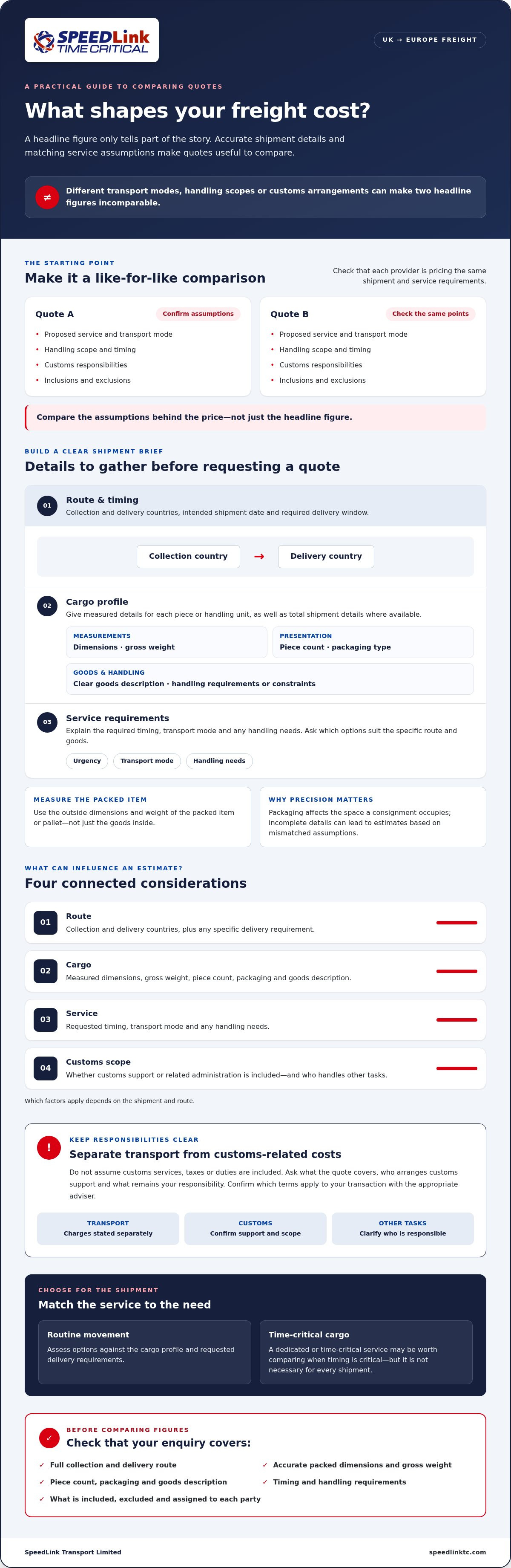
A useful freight estimate is based on accurate route and cargo details, matched to the service being requested. That is the starting point for calculating freight costs UK to Europe: the same goods can produce different quotes if the transport mode, timing, handling or responsibilities differ.
Parcel calculators can provide a quick indication using basic details such as origin, destination and weight. Business freight and specialist cargo often need a fuller assessment. A palletised load, fragile equipment or goods requiring particular handling may not be represented accurately by a simple parcel-size field. If one quote assumes standard packaging and another allows for specific handling, their headline figures aren’t directly comparable.
Which shipment details should you gather first?
Record the collection and delivery countries, intended shipment date and required delivery window. For the cargo, provide:
- Dimensions and gross weight of each piece or handling unit
- Total piece count and packaging type
- A clear description of the goods
- Any handling requirements or constraints the provider should assess
Use packed dimensions and weights where possible. For example, measure the outside of the packed item or pallet, not just the goods inside it. An incomplete cargo profile can lead to an estimate based on assumptions that don’t match the consignment.
Estimate, quote and final charge: what is the difference?
An estimate is only as relevant as the information supplied and the assumptions used to produce it. Before comparing it with another provider’s quote, check the proposed service, transport mode, handling scope, customs responsibilities and stated exclusions. Confirm whether the estimate assumes the sender or recipient will manage particular tasks. Incoterms can help explain how buyers and sellers allocate responsibilities in an international sale, but confirm which terms apply to your transaction with the appropriate adviser.
Once the shipment profile is clear, providers can assess suitable options rather than price different interpretations of the same request. If the route, cargo details or service availability are uncertain, ask for those assumptions to be confirmed before treating a figure as comparable.
What makes up UK-to-Europe freight costs?
For calculating freight costs UK to Europe, providers consider the route, cargo profile and requested service together. Dimensions, gross weight and packaging help establish which transport options may be suitable. Urgency and handling requirements matter too: a time-critical consignment or cargo needing specialist attention may require different arrangements from a routine freight movement. Ask the provider to confirm that the proposed service is suitable for the specific route and goods.
Use this checklist to understand what may influence an estimate. Which factors apply depends on the shipment and route:
- Route: collection and delivery countries, plus any specific delivery requirement.
- Cargo: measured dimensions, gross weight, piece count, packaging and goods description.
- Service: requested timing, transport mode and any handling needs.
- Customs scope: whether customs support or related administration is included, and who is responsible for other shipment tasks.
How do cargo size, weight and service requirements affect a quote?
Provide measured dimensions and gross weight rather than estimates. Packaging can change the space a consignment occupies, while the piece count helps explain how it is presented for transport. Give the provider the measurements for each handling unit as well as the total shipment details, where available. Clearly flag time-critical requirements and specialist handling needs, then ask which options are suitable. A dedicated or time-critical service may be worth comparing when timing is critical, but it isn’t necessary for every shipment.
Where do customs responsibilities fit into the calculation?
Keep transport charges separate from customs-related services and any taxes or duties that may apply. Don’t assume these are included. Ask who will arrange customs support, what the quote covers and what remains your responsibility. SpeedLink offers customs services; confirm the scope for your shipment. For paperwork preparation, consult official UK government guidance and verify shipment-specific requirements with an appropriate source.
Share the route, cargo and timing details with SpeedLink’s team to discuss options for your shipment.
How to calculate and compare freight costs step by step
A consistent process makes calculating freight costs UK to Europe more useful for procurement and operational planning. Work through these steps before choosing a quote:
- Confirm the route: record the collection and delivery countries, then ask each provider to assess that route.
- Document the cargo: use the same goods description, piece count, packaging, measured dimensions and gross weight for every enquiry.
- Define the timing: state the shipment date and required delivery window. Distinguish a firm operational need from a preference.
- Identify handling needs: describe any sensitivities or constraints so providers can assess whether their proposed service is suitable.
- Request comparable quotes: provide the same brief and ask each provider to identify exclusions, handling scope, customs responsibilities and assumptions.
How can you compare quotes on a like-for-like basis?
Check that each estimate uses the same origin, destination, cargo information and delivery requirement. Record the proposed service, customs arrangements, exclusions and quote validity in one comparison sheet. If an estimate assumes different handling or leaves responsibilities unclear, ask for clarification before comparing totals. A lower transport charge may not represent the same scope or operational outcome.
When should you compare road, air, sea or dedicated transport?
For wider context on UK-EU trade flows, consult the House of Commons Library’s Statistics on UK-EU trade. Use your own route, service scope and shipment details as the basis for quote decisions.
Request a UK-to-Europe freight quote with the right information
A clear enquiry helps a provider assess options against your actual shipment instead of making assumptions that could distort the estimate. For calculating freight costs UK to Europe, send the same complete brief to each provider and ask them to confirm route and service availability.
What should a freight enquiry include?
Prepare a concise shipment summary using the details below. If something is not yet confirmed, label it as provisional rather than presenting it as fact.
- Route: confirmed collection and delivery countries.
- Cargo: goods description, piece count, packaging, measured dimensions and gross weight.
- Timing: preferred shipment date and required delivery window.
- Handling: specific requirements, constraints or sensitivities the provider should consider.
- Customs: known arrangements, intended responsibilities and any documentation already available.
Ask which customs support is included and who is responsible for the remaining tasks. Check shipment-specific paperwork requirements with an appropriate source rather than relying on a general estimate to confirm them.
When is a specialist logistics discussion useful?
A discussion can help assess service fit when a shipment is urgent, sensitive, unusually presented or has handling needs that a basic calculator may not capture. SpeedLink offers freight services and EU shipping with customs clearance. Its specialist courier services include transport for sensitive items such as dangerous goods, lithium batteries, fine art and IT equipment. The right option depends on the cargo and confirmed route. If delivery is time-critical, ask whether a same-day courier service is suitable and available for the consignment rather than assuming it is needed.
Share the origin, destination, cargo and timing details with SpeedLink’s team to discuss options that may be available for your shipment.
Prepare your shipment details before requesting a quote
Confidently calculating freight costs UK to Europe starts with a clear shipment brief. Confirm the route, packed dimensions, gross weight, timing and handling needs. Then compare quotes using the same information, checking service scope, exclusions and customs responsibilities before weighing up the transport options.
SpeedLink offers freight services and EU shipping with customs clearance, as well as specialist courier services for sensitive cargo. Share the shipment details and required delivery window so the team can discuss options that may fit your operational needs. Confirm route and service availability before making a decision.
Frequently Asked Questions
How do I calculate freight costs from the UK to Europe?
Start by giving providers the confirmed collection and delivery countries, cargo description, piece count, packaging, dimensions, gross weight and required timing. Ask for options based on the same shipment details, then compare what each estimate includes. Calculating freight costs UK to Europe isn’t a single calculation: the route, service, handling needs and customs responsibilities all affect whether quotes are comparable.
What information do I need for a freight quote to Europe?
Provide the confirmed origin and destination countries, shipment date and required delivery window. Describe the goods, number of pieces and packaging, and provide measured dimensions and gross weight for each item or handling unit. Include handling needs and known customs arrangements. If details are provisional, label them clearly so the provider can explain which assumptions affect the estimate.
Do freight quotes include customs clearance, duties and taxes?
Not necessarily. A quote should state whether customs support or clearance is included and identify any tasks that remain with the sender, recipient or another party. Don’t assume duties or taxes are covered by a transport charge. Ask who is responsible for confirming and paying any applicable amounts, and check shipment-specific documentation and tax guidance with an appropriate authoritative source.
Why do freight quotes for the same UK-to-Europe shipment differ?
Quotes can differ because providers may be pricing different transport modes, delivery requirements, handling arrangements or customs scope. They may also have used different cargo dimensions, weights or packaging assumptions. Check that the route and shipment data match, then compare exclusions, included services, quote validity and the responsibilities assigned to each party. Ask providers to clarify any assumption you can’t verify.
Should I choose road, air or sea freight for a European shipment?
Choose based on the cargo, required timing, handling needs and options available for the specific route. Road, air and sea freight may suit different shipment requirements, so ask providers to assess appropriate modes rather than assuming one is suitable. A dedicated or time-critical option may be worth comparing if timing is critical, but not every consignment needs a specialist service. Confirm availability before deciding.

Article by
Dave McMillen
I have worked in courier and logistics for over 30 years. My experience spans two continents and several types of services from road freight to airlines and specialist B2B services. SpeedLink has been serving the UK market for over 20 years providing the finest time critical and specialist services supporting businesses and individuals alike.
Disclaimer
Information is provided as general logistics guidance and is not legal, customs, aviation, medical or dangerous-goods compliance advice.
Rules vary according to commodity, quantity, classification, packaging, origin, destination, transport mode and carrier.
Regulations and carrier requirements may change.
Where regulated goods are involved, current requirements should be confirmed with the appropriate government authority, regulator, carrier or qualified specialist before shipment.
SpeedLink can confirm the transport options it can provide for a particular shipment.


