


Effective logistics for pop-up shops and events start with more than booking a delivery. Stock, display materials and equipment need to reach the venue during its access window, be handed to the right person and be ready for setup. The transport plan should also cover breakdown, collection and any onward movements.
The right arrangement depends on what is moving, how it needs to be handled, the route and how flexible the schedule is. A standard courier, dedicated vehicle or freight service may each suit a different shipment. Planning these details together helps reduce avoidable delays and last-minute changes.
This guide compares transport options and explains how to coordinate venue access, delivery handover and post-event collection. It also covers the shipment information to prepare and the people to keep informed. SpeedLink provides exhibition and events courier services, with transport planned around the shipment, route and event requirements.
Key Takeaways
- List every item, from retail stock to display equipment, and record its delivery, handover and return requirements.
- Choose between network courier, dedicated transport and freight based on shipment size, handling needs and schedule flexibility.
- Build a practical plan for logistics for pop-up shops and events by recording venue access details, recipient contacts and collection arrangements.
- SpeedLink’s exhibition and events logistics can be tailored to the shipment, route and event requirements.
Logistics for Pop-Up Shops and Events: What Needs Moving and When?
Event logistics covers the planned movement, handover and return of the goods needed to run an event. This can include retail stock, display materials, promotional items and equipment such as screens or point-of-sale technology. It applies the wider principles of What is Logistics? to a temporary operation with defined setup and breakdown periods.
Event logistics is more than booking a delivery: it connects each shipment to venue access, the recipient, the setup schedule and the return plan. A delivery that arrives outside the venue’s access window, or without a named recipient, may leave goods waiting when the team needs to prepare the space. Confirm these practical details before arranging transport.
Map the event shipment before arranging transport
Prepare an inventory with item types, quantities, dimensions and handling requirements. Note how each item is packed and identify anything that may need specialist handling, such as high-value equipment or artwork. Record the collection point, event dates, venue delivery instructions and the name and contact details of the person receiving the shipment. This information helps the logistics coordinator assess the movement against the actual load and venue requirements.
Plan both arrival and departure
For exhibition-specific planning, see SpeedLink’s exhibition and events courier service. Planning both directions helps keep stock and equipment aligned with the event schedule, rather than treating delivery as a one-off task.
Which Event Logistics Option Fits: Courier, Dedicated Transport or Freight?
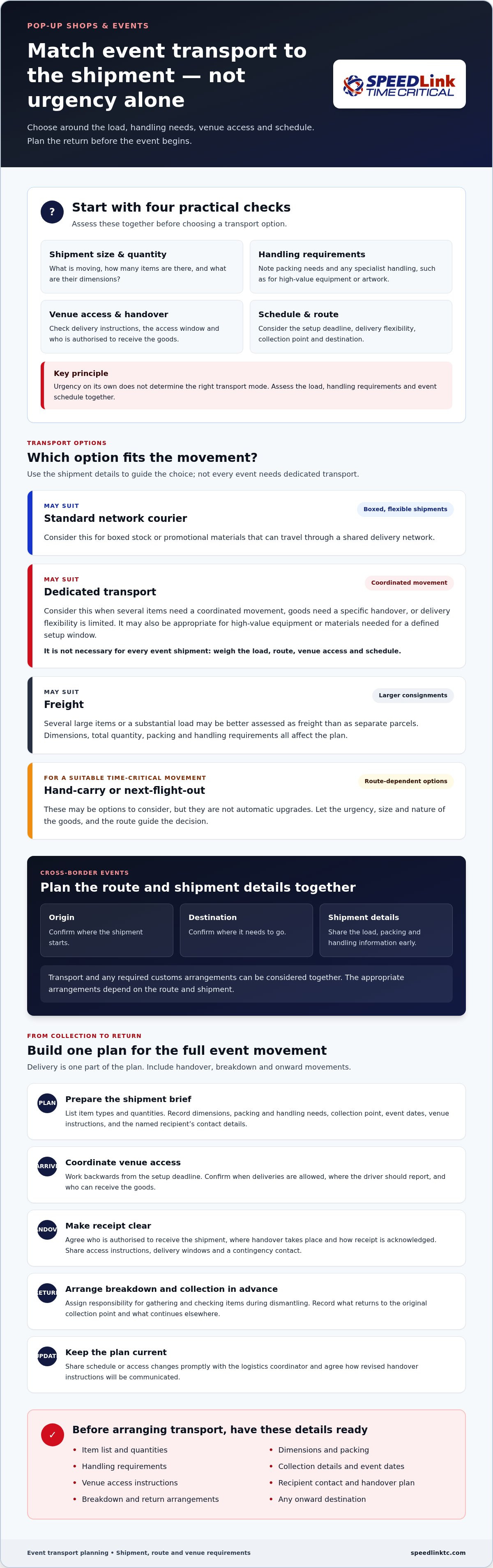
The suitable option depends on the shipment’s size, quantity, handling requirements and delivery flexibility. A standard network courier may suit boxed stock or promotional materials that can travel through a shared delivery network. Dedicated transport may be more appropriate when goods need a coordinated movement or a specific handover. Larger consignments may call for freight planning rather than being treated as a collection of separate parcels.
Urgency alone does not determine the right transport mode: assess the load, handling requirements and event schedule together. Momentus also outlines the coordination involved in event logistics management, including planning across teams.
When dedicated event transport may make sense
Dedicated transport may suit a shipment containing several coordinated items, high-value equipment or materials needed for a defined setup window. It can be useful when delivery flexibility is limited and the handover needs careful coordination, but it is not necessary for every event shipment. Consider the load, route, venue access and schedule before choosing. SpeedLink’s exhibition and events courier service is tailored to shipment and route requirements.
For a suitable time-critical movement, hand-carry or next-flight-out may also be options to consider. They are not automatic upgrades: the urgency, size and nature of the goods, as well as the route, should guide the decision.
When freight or international transport needs extra planning
Several large items or a substantial load may be better assessed as freight than as parcel traffic. Dimensions, total quantity, packing and handling requirements all affect the plan. For cross-border events, provide the origin, destination and shipment details early so transport and any required customs arrangements can be considered together. The appropriate arrangements depend on the route and shipment.
Event Logistics: A Plan from Collection to Return
A well-planned event movement covers preparation, delivery, handover and return. Start with a current inventory, recording each item’s quantity, dimensions, packing and handling requirements. Add the collection point, event dates, venue instructions and named recipient. This gives the logistics coordinator the details needed to plan around the actual shipment rather than assumptions.
Before arranging transport, prepare the item list, dimensions, handling needs, collection details, venue instructions, recipient contact and return plan. Use protective packing suited to the goods and clear labels to help identify items during handling and handover. For technical equipment or artwork, describe the contents and any specific handling requirements in the shipment information.
Create a clear event-day handover
Confirm who is authorised to receive the shipment, where the handover will take place and how receipt will be acknowledged. Share venue access instructions, delivery windows and a contingency contact who can respond if arrangements change. Keep the inventory available at both ends so the team can reconcile what arrived with what is packed for return.
Plan the return collection before the event opens. Assign responsibility for gathering and checking items during dismantling. Record any goods that are going to another destination rather than back to the original collection point.
Prepare for changes and cross-border movements
Event schedules can change. Share updates promptly with the logistics coordinator and agree how revised access or handover instructions will be communicated. A flexible plan helps the team respond without assuming a particular recovery time. For international movements, consider the specific origin, destination and shipment details. Where customs support is relevant, SpeedLink’s customs services can form part of the route plan.
Clear communication keeps logistics for pop-up shops and events aligned with operational changes, from collection through to the final return movement.
Choosing Event Logistics Support: Build a Plan Around Your Pop-Up
Choose event logistics support by matching the shipment to the event’s operational requirements, not by selecting a transport option on urgency alone. Set out what is moving, its dimensions and handling needs, where it must travel and the milestones it must meet. Include setup deadlines, venue access, handover arrangements and the return movement. A clear brief gives the logistics coordinator a practical basis for planning.
What a useful event logistics plan should make clear
A workable plan identifies the collection and delivery points, shipment contents, event dates and any fixed access windows. It names the people responsible for receiving and releasing the goods, explains how handover will be acknowledged, and states whether items return to their original point or continue elsewhere. For event-specific requirements, SpeedLink’s exhibition and events courier service is tailored to the shipment and route.
Move from planning to a tailored discussion
When discussing the movement, share the item list, quantities, dimensions, handling requirements, origin, destination and event dates. Include setup or breakdown constraints that could affect delivery or collection. These details help SpeedLink plan exhibition and event logistics around the shipment and route, without assuming every event needs the same transport arrangement.
A structured brief turns logistics for pop-up shops and events into a coordinated plan for inbound delivery, handover and post-event movement. It also gives everyone involved a shared reference if event details change.
Put Your Event Logistics Plan into Motion
Reliable logistics for pop-up shops and events start with a clear view of what must move, the venue’s access requirements and the schedule for delivery, handover and return. Match the transport option to the shipment’s size, handling needs and flexibility, then share accurate details with everyone coordinating the movement.
A plan based on the event’s requirements can reduce avoidable uncertainty without defaulting to the most urgent or complex transport option. SpeedLink provides dedicated logistics for exhibitions and events, alongside specialist courier and freight services for business movements. Each plan can be tailored to the shipment, route and event needs.
Prepare the shipment details, venue instructions and return arrangements, then speak to SpeedLink about planning transport for your event.
Frequently Asked Questions
What does logistics for a pop-up shop or event include?
It includes planning the movement, handover and return of the goods needed for the event. This may cover retail stock, display materials, promotional items and equipment, with arrangements shaped by the venue’s access instructions and schedule. A complete plan accounts for collection, delivery, the recipient, setup deadlines and post-event movements, rather than treating transport as a single delivery booking.
Is dedicated transport better than a standard courier for event equipment?
Not necessarily. The right option depends on the shipment and event requirements. A standard courier may suit boxed items that can travel through a shared network with flexible delivery arrangements. Dedicated transport may be more appropriate for a coordinated load, a specific handover or restricted venue access. Consider the equipment’s dimensions, quantity, handling needs and schedule before choosing.
How should I plan delivery and collection for a pop-up event?
Start with the event setup and breakdown schedule, then establish when the venue can receive and release goods. Record delivery instructions, access restrictions, the recipient’s contact details and how receipt will be acknowledged. Arrange the return movement before the event opens, and keep an inventory for checking items during handover and collection. Share schedule changes promptly with the logistics coordinator.
Can event logistics include international transport and customs support?
Yes. SpeedLink provides EU shipping with customs clearance, and international event movements can be planned around the specific origin, destination and shipment details. Share what the goods are, where they are travelling from and to, and the event dates so transport and customs arrangements can be considered together. Requirements differ by route and shipment, so do not assume every movement follows the same process.
What information should I provide when arranging event logistics?
Provide an inventory with item types, quantities, dimensions, packing and handling requirements. Include the collection point, destination, event dates, setup deadline, venue access instructions and delivery window. Name the recipient and provide a contact for changes or handover queries. Explain how goods should be reconciled after the event, including the return destination or any onward movement.

Article by
Dave McMillen
I have worked in courier and logistics for over 30 years. My experience spans two continents and several types of services from road freight to airlines and specialist B2B services. SpeedLink has been serving the UK market for over 20 years providing the finest time critical and specialist services supporting businesses and individuals alike.
Disclaimer
Information is provided as general logistics guidance and is not legal, customs, aviation, medical or dangerous-goods compliance advice.
Rules vary according to commodity, quantity, classification, packaging, origin, destination, transport mode and carrier.
Regulations and carrier requirements may change.
Where regulated goods are involved, current requirements should be confirmed with the appropriate government authority, regulator, carrier or qualified specialist before shipment.
SpeedLink can confirm the transport options it can provide for a particular shipment.


